After Gerrymander Maxing, How Many People's Votes Really Matter?
Tyranny of the Minority

As we continue to watch states descend into partisan redistricting like it's an Olympic sport, more are jumping into the fray.
President Trump and Senator Jim Banks’ absolute landslide victory in Indiana will put a fire underneath legislators in the Deep South, including Alabama, Louisiana, and South Carolina, to move on redistricting.
Democratic states like New York, New Jersey, and Colorado are also looking to weigh in sometime after the midterms.
While some states, like Virginia and Florida, are in the midst of lawsuits that could delay redistricting, those states will likely end up with more partisan maps in 2028 or when the new Census takes effect in 2032.
The only states left untouched will be places with divided governments like Wisconsin, Michigan, Iowa, Arizona, and Pennsylvania.
So, that leaves me to ask: just how many seats will end up deciding the House Majority in every election cycle if we get to a place where states have gerrymandered swing districts out of existence?
It’s a difficult question to answer because new swing seats are created during wave elections; for instance, House seats in South Texas and South Florida were much more Republican after Trump’s 2024 election, and the backlash against the Bush years took out traditional Republican districts in California, New York, New England, and Maryland.
But according to the most recent map, it looks like just 22 seats would be truly competitive if all other partisan states began heavily drawing out swing seats.
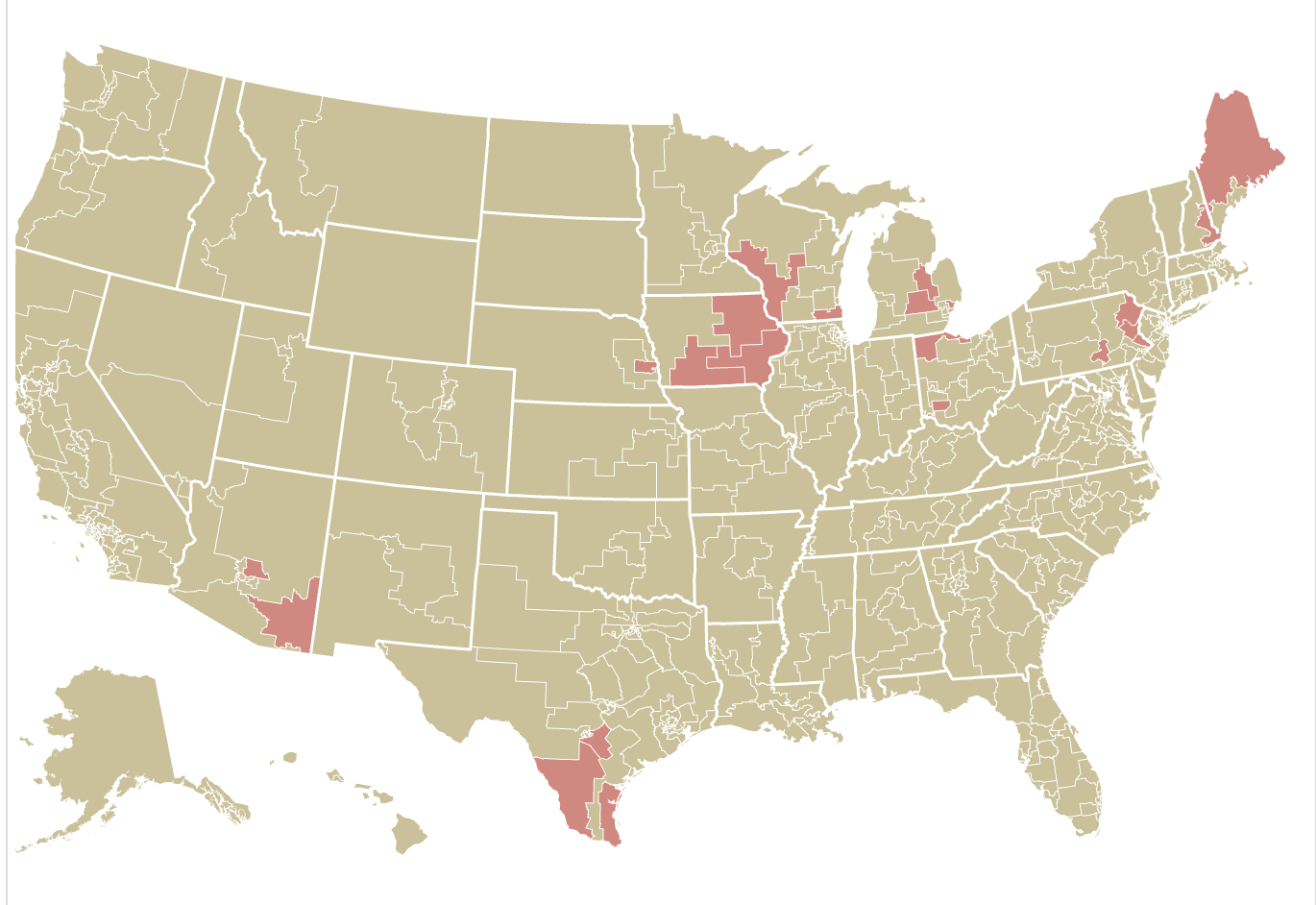
How many voters would then get to decide the makeup of the country’s laws?
Using numbers from the 2024 elections in those seats, about 7.6 million voters out of 149.5 million ballots cast, or about 5 percent of American voters, will live in a true swing district if red and blue states go forward with redistricting maxing.
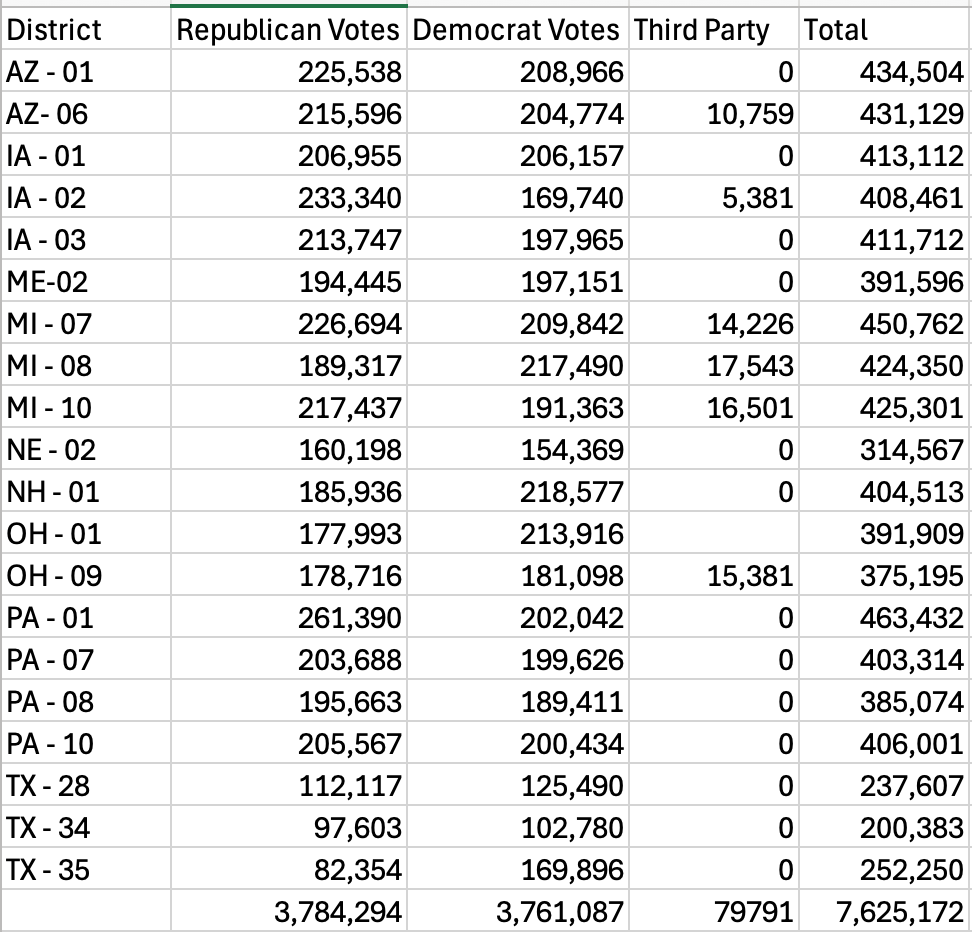
With the 2030 Census, we might pick up a few more, as Arizona, Texas, and Florida add more seats and may have to draw more competitive districts. Even then, it will be limited, and America may be in a period of being governed by the super minority living in the right zip codes or, in some cases, just the right side of a street.