What Does a Wave Election Look Like Anymore?
They weren't built like they used to

While there’s no exact definition of what constitutes a real wave election, in the past, it’s been used to describe any election in which a party wins dozens of seats, more than five in the Senate, or the presidency by a margin wider than the typical 50-50 split.
Since 2000, the House of Representatives has held four wave elections: 2006, 2008, 2010, and 2018. Three that favored the Democrats and one that favored the Republicans.
According to National Affairs, the Tea Party election of 2010 “washed away hundreds of Democrats at all levels of government, giving Republicans their highest number of seats in the House of Representatives since 1946.” In that election, Republicans won 63 House seats.
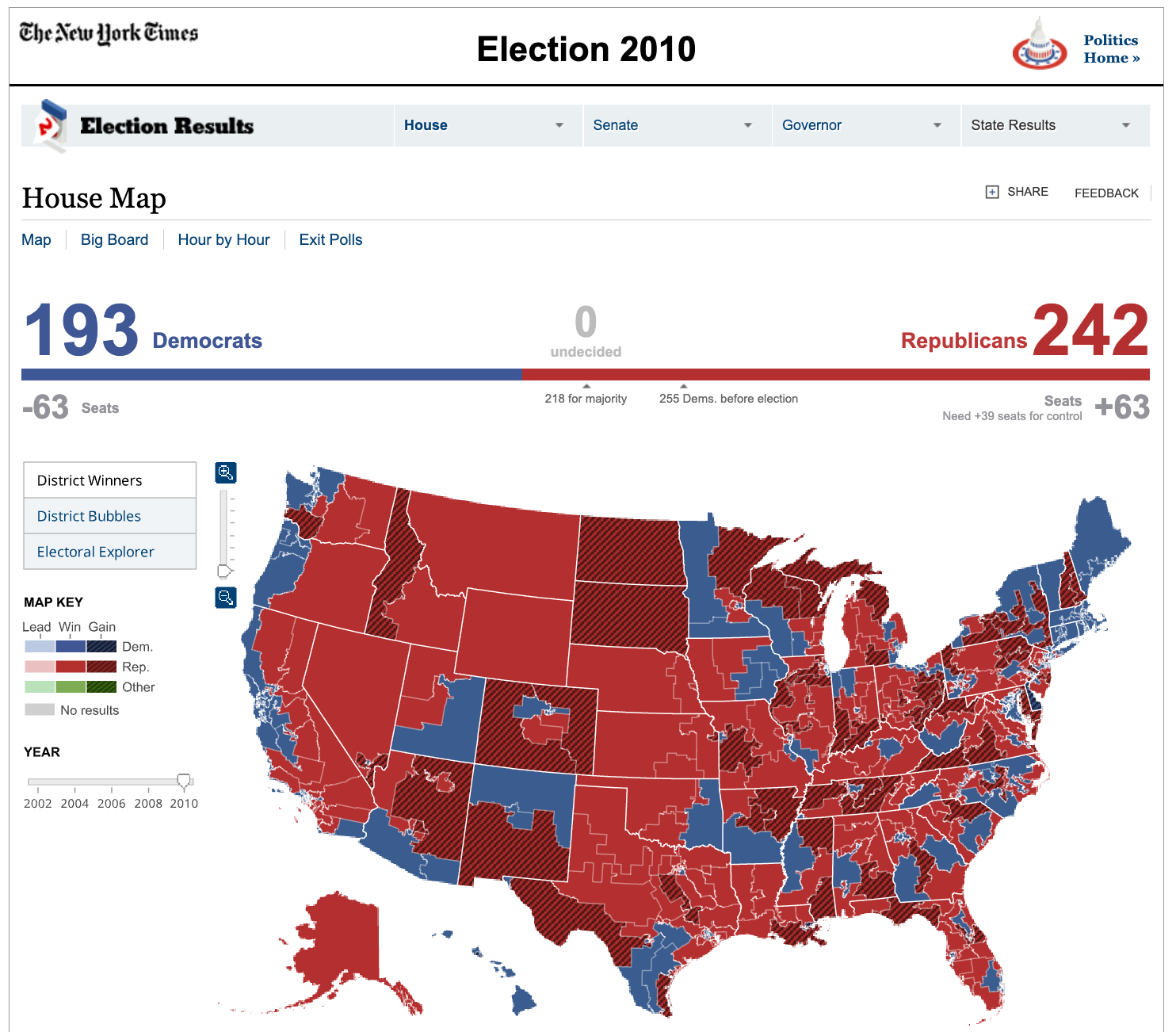
It wasn’t just that Obama was unpopular; he was in large part because of his endless spending and push for the Affordable Care Act, but helping Republicans was the realignment of southern and midwestern working-class white voters washing their hands of Democrats in the House, as they had done for Democrats in presidential elections going back to the 1970s.
Moderate blue-dog Democrats were annihilated in that election, and it was just the beginning. In the subsequent midterm election in 2014, they saw their numbers dwindle further—a precursor to Trump’s realignment just two years later.
While national trends affect elections, the unpopularity of Bush, Obama, and Trump in their midterms definitely helped the opposition party score big wins. Still, the realignment of decades-old voting habits plays a bigger role than most people expect.
In 2006 and 2008, the Iraq War, souring economy, and negative opinions about Bush helped Democrats. Still, there were plenty of ancestral Republican House seats that had become low-hanging fruit, helping Democrats pick up 52 seats in two election cycles.
Democrats won seats in Northern California, Connecticut, New York, the suburbs of Denver, Washington D.C., and Chicago, Vermont, New Hampshire, coastal parts of New Jersey, and Maryland. Looking from the perspective of 2025, it’s hard to believe that Republicans ever held those seats to begin with.
In 2018, when the Democrats gained 40 seats in the House, a big part of that victory was due to the shifting mood in wealthy suburban areas across New Jersey, Pennsylvania, Iowa, California, Illinois, and New York.
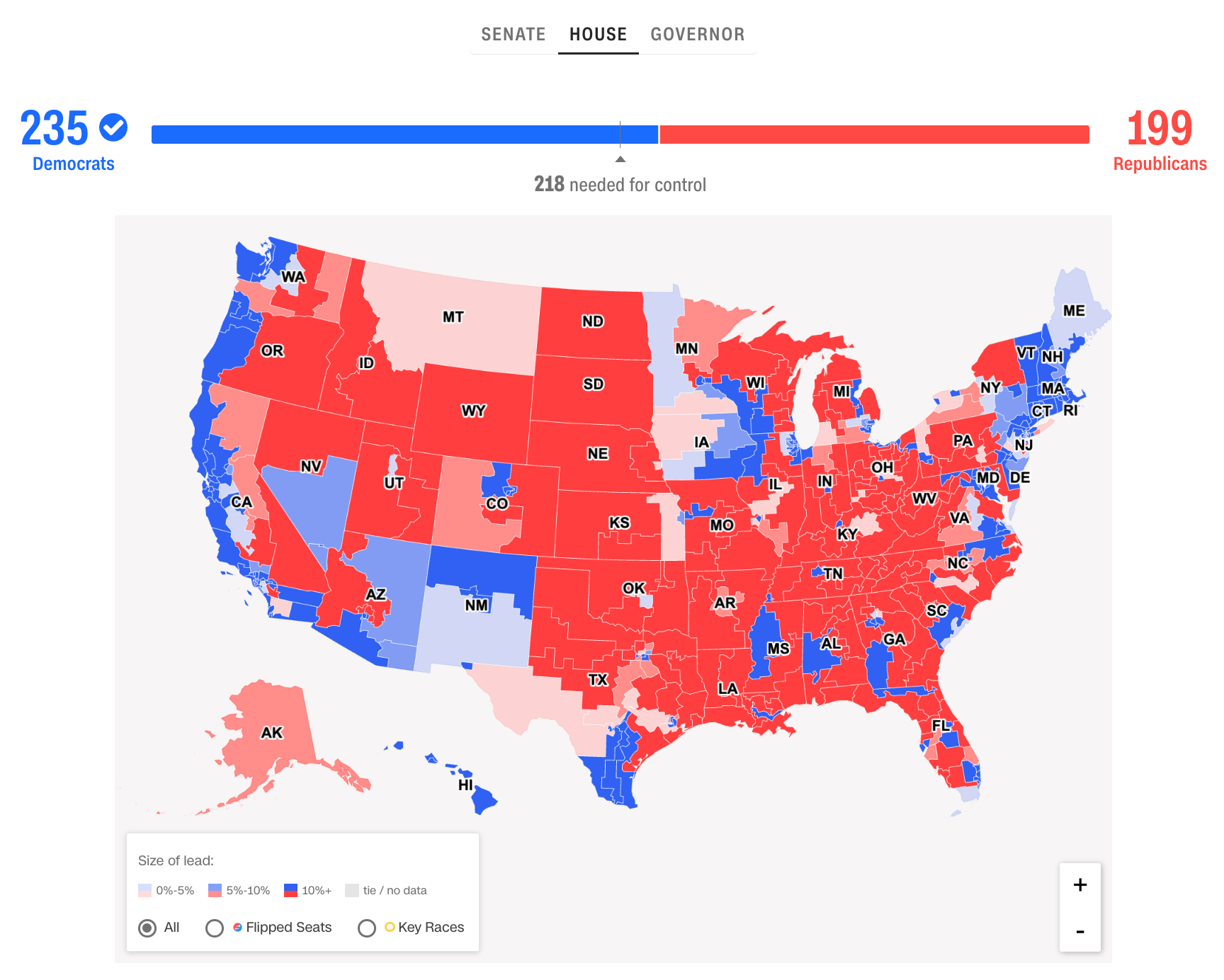
Are political realignments still happening? Sure, but not at the same speed. There aren’t dozens of seats that vote for one party for President and another for the House of Representatives. Sadly, that voting tradition is on its way out in federal elections. Not to mention that we currently have fewer swing seats than ever before.
So what would a 2006, 2008, 2010, or 2018-style wave election look like today? How many seats would it flip?
In all those elections, the winning party won by margins of 8, 8.6, 7.8, and 8.6 percent, respectively. So, let’s say we have an election where either the Republican or Democratic party’s margin of victory in the House was 8 points, what would that look like?